



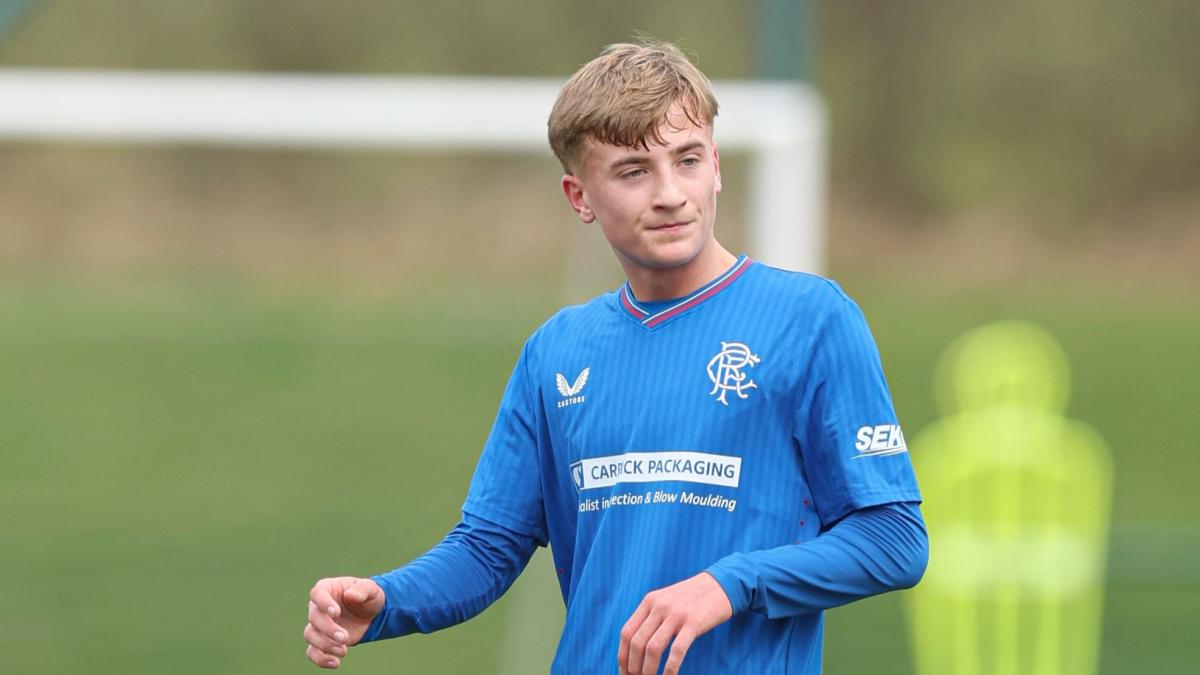
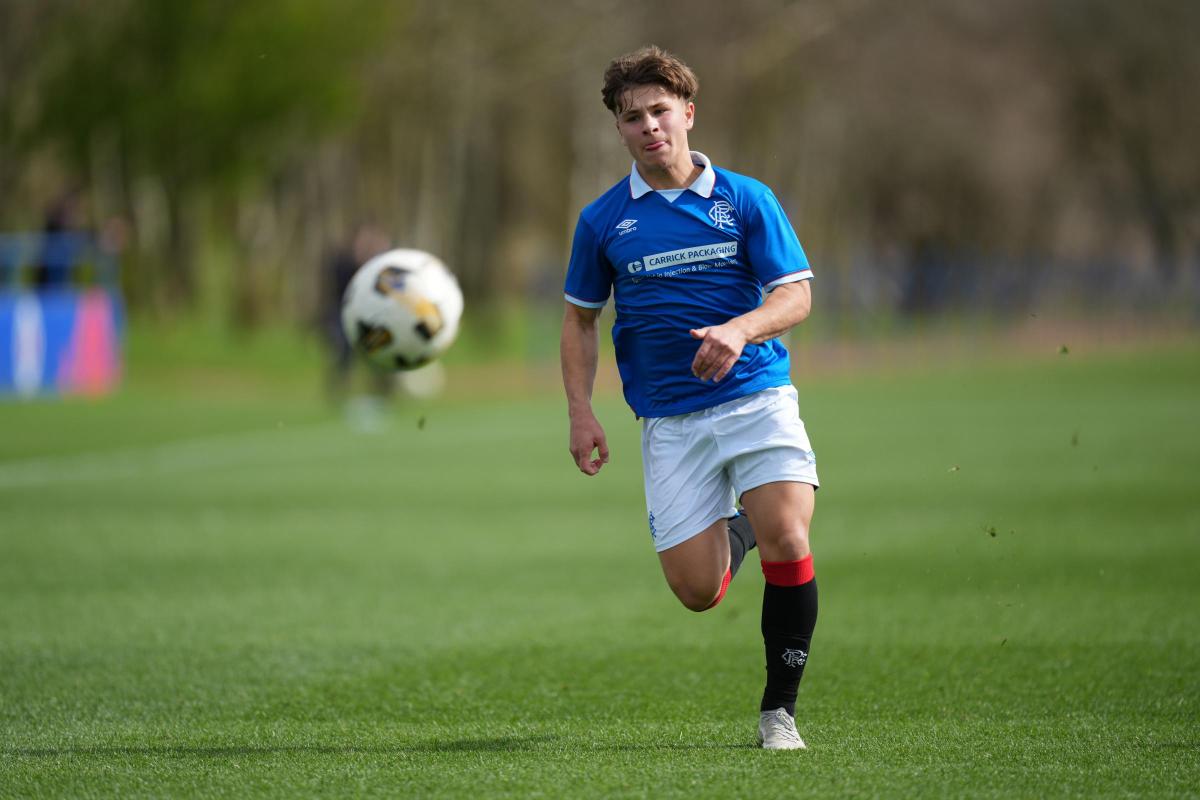
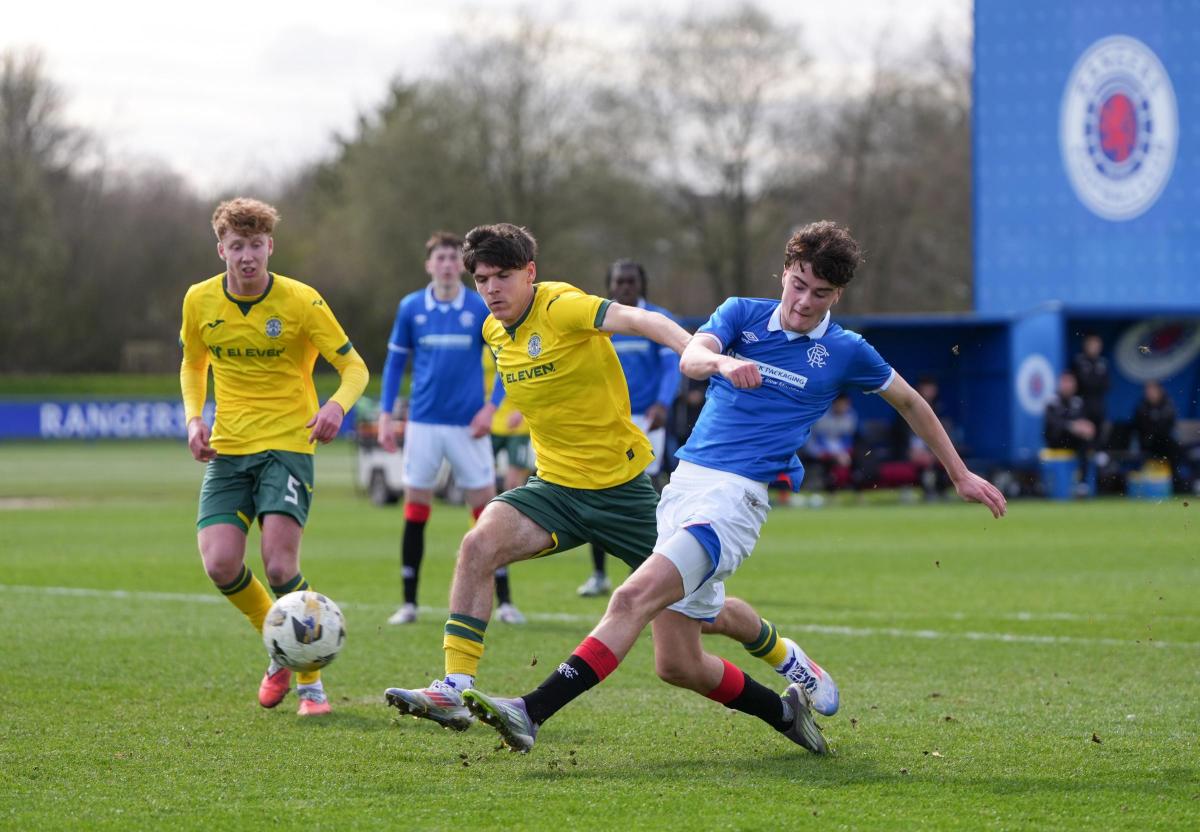

Rangers Under-19s fell to a 4-2 defeat against Hibernian in their final League Cup group match, a result that sees them fail to qualify from their section. It was a performance that offered both encouragement and frustration, as Rangers’ domination in the second half was not capitalised on, with several missed opportunities and unfortunate mistakes at the back.
The young Gers made a bright start as Calum Adamson gave them an early lead inside 10 minutes. Aiden McCallion’s delivery caused problems in the Hibs box, with Jack Wyllie winning the first contact before Adamson reacted quickest to fire home the rebound and give Rangers an early advantage.
The lead was short-lived, however, as the visitors responded immediately through a corner of their own. A deep delivery, coupled with a series of deflections, helped the ball land at the feet of Callum MacDonald, who struck into the corner to level the match.
Read more:
- Rangers tracking Dundee defender Luke Graham ahead of summer window
- Rangers 4-2 Dundee United: Who impressed for Rohl's side and one remaining concern
Rangers regained control and dominated the early stages of the second half. Their lead was restored through Max Cameron as Adamson pressed well, winning the ball in the opposing third. He slipped through Cameron, who confidently fired into the net.
Despite Rangers’ dominance, Hibs were awarded a penalty midway through the second half, which Josh McDonald converted to make it 2-2.
The visitors then turned the game around late on. Logan Jimenez fired home from close range following a corner to give Hibs the lead, before adding a second in stoppage time after a costly mistake at the back sealed a 4-2 victory.
Defensive structure shows promise and demise
In a game where Rangers conceded four, it may seem strange to highlight the defence as a positive, yet the structure and intent without the ball offered encouragement. When you concede from two corners, a penalty and an unlucky mistake, the context of the analysis changes dramatically, as in open play Rangers never really looked likely to concede.
Reflecting the clear principles of the first team, it is obvious that the 19s are instructed to press instantly, with intent and purpose. Whether from a goal kick or when losing the ball in midfield, the reaction of the players is clear: go and get the ball back.
Set up in a man-to-man approach, the young side looked to engage Hibernian aggressively across the pitch, matching opponents directly and aiming to disrupt build-up at source. This approach allowed Rangers to get extremely tight to their opponents all over the pitch. The midfield became increasingly congested, and Hibs were often rushed at the back into playing inconsistent, risky passes, which led to a number of turnovers in Rangers’ favour.
It was from this intensity and proactive defending that much of the game was controlled, bar the last 15 minutes. This was most evident in Rangers’ second goal as Adamson read a pass into midfield, intercepting it in the Hibs defensive third, before Cameron was slipped through after a well-timed run to finish ferociously into the corner.
The structure, however, naturally comes with its own challenges, particularly against teams that play with variety. Hibs’ first intent was to play out from the back, similar to Rangers. Wide players and the two deeper midfielders would look to receive short with a Rangers defender on their back and, in doing so, allowed space in Rangers’ defensive channels to be hit with a simple long ball. By dropping a forward short and inviting pressure, they were able to create space for midfield runners to break beyond, testing Rangers’ defensive line in behind.
As Rangers conceded their third and pushed to find an equaliser, these gaps became bigger, and Hibs’ fourth goal came from a long ball over the top which was not dealt with properly. Under pressure from the Hibs attacker, Oliver Hynd played an underhit pass back to his goalkeeper, Sam Reid, which was intercepted and finished accordingly.
Importantly, the intent remains clear. Rangers are being encouraged to play with bravery, to engage high and to take responsibility in duels across the pitch. While not without its risks, the foundation of the pressing structure is strong, and Danny Rohl will be pleased to see his young players putting his work into practice.
Dominance without reward
Rangers’ control of possession across large spells of the match highlighted a side comfortable dictating tempo and building through structured phases. Their ability to sustain pressure, recycle the ball and work into advanced areas ensured that Hibernian spent long periods without meaningful control.
Unfortunately, this control of possession did not translate into the goals that should have killed off the game for Rangers; however, this does not come without its positives. As outlined in previous games, the young Gers like to use McCallion as their third centre-back, receiving and dictating play from that position. With this comes extra rotations throughout the pitch.
One in particular that stood out was that of Kyle Glasgow and Arran Kerr on the right-hand side. In previous games, Glasgow has come inside more often than not, allowing the right-back to play outside him. In yesterday’s match, Kerr would occupy the inside role, allowing Glasgow to stand up his defender 1v1. Kerr played between the opposition left-back and centre-back, offering runs in behind and between those areas of the Hibs backline. From this, balls were played into the box and, if Kerr wasn’t found, his run committed a defender, leaving space for another Rangers attacker to exploit.

However, these well-crafted rotations were not utilised enough. Kerr had a great opportunity in the first half when his cross was well defended. Cameron Fernie struck the post from a Glasgow cut-back after intricate play on the right, which would have put Rangers two ahead at 3-1. Further opportunities followed, with Fernie again going close at the back post and McCallion firing narrowly wide from the edge of the area.
The openings were there. The control was there. What was missing, at crucial moments, was the clinical edge to convert opportunities, and Rangers paid the price. The foundations are clearly in place, and the young Rangers side was unlucky not to come away with a win. It was another learning experience and, with that, came immense disappointment at the end; they knew they had the opportunities to win, and from that, the team knows they need to be ruthless, adding that clinical edge to ensure that, when those moments arrive, they are taken and games like this are put beyond doubt.
Adamson leads with physicality and authority
In a performance that contained many positives and learning moments, Calum Adamson stood out in the heart of midfield. Adamson, being one of the loanees at Alloa this season, has had limited game time at Under-19 level, and the same could be said of Arran Kerr. However, due to suspension this weekend and his missing out on valuable minutes on Saturday, Adamson’s inclusion was a no-brainer.
The first thing that stood out was that the older players in the group – Adamson, Wyllie and Kerr – showed a noticeable difference in sheer physicality compared to the other players in the Rangers team, a testament to their loan spells and the benefits they bring.
Adamson got his goal early in the game, reacting quickest to a loose ball inside the box. He showed calmness under pressure to guide his finish into the bottom corner, rewarding Rangers’ bright start and early control. It was a moment that reflected both awareness and technical quality, attributes that were evident throughout his performance.

In possession, Adamson played a free role in which he could drop short to receive from the centre-backs and combine with his midfield partner, McCallion. In controlled possession in the attacking third, Adamson would join Cameron as the second striker, stretching the game, creating greater gaps in midfield and allowing Rangers to set up the ‘box’ structure similar to the first team. He showed technical prowess and an excellent reading of the game, knowing where he would be most effective for himself and for the team as a whole.
Beyond possession, Adamson’s influence extended across all phases of play. Out of possession, he played a key role in Rangers’ pressing structure, consistently engaging opponents with intensity and helping to set the tempo for those around him. His physical presence allowed him to compete strongly in duels, while his work rate ensured he contributed both in advanced areas and defensively when required.
All of this culminated in Rangers’ second goal, where his attributes combined superbly. Through his reading of the game, he was able to intercept and hold off the recovering defender. While doing so, his technical ability kept the ball under control as he skipped past a challenge, allowing Cameron to be played in with an inch-perfect pass.
Crucially, his experience stood out within a side that continues to evolve week by week. With players moving between different environments and adapting to new roles, having a figure capable of providing consistency and direction becomes increasingly important. Adamson’s performance offered a blend of maturity and quality that helped stabilise the team in key moments.


Share