



You know if a manager voluntarily offers up criticism of his team, he probably means it. So when Danny Rohl lamented Rangers’ wastefulness in transition against Motherwell, it could not be dismissed as hindsight. He had highlighted the issue pre-match.
“I think I spoke after the Hibs game, in the last 15 minutes, and today again, this is what we have to improve very soon,” he said, referencing his side’s inability to kill either game off. Rangers took 28 shots against Motherwell and passed up numerous moments to kill the game off but, once again, were wasteful.
Speaking on December 23, Rohl had warned: “I think especially in possession, we have to improve. We have to be more connected. Against the ball, we see in every game a clear structure. We have more effort, we are more aggressive, we have more clean sheets, but of course, the next step is now also to improve in possession.”
Rangers could have counted themselves fortunate that Motherwell did not take the lead at Ibrox, with Jack Butland’s performance making amends for recent errors at Tynecastle. Equally, in the second half, their inability to put the game to bed bordered on the comical at times.
An expected goals figure of 3.3 was Rangers’ highest open-play total of the season, even before accounting for several dangerous transition moments that failed to produce a shot. After the first 45 minutes in which the visitors held the upper hand, Rangers controlled the second period, as illustrated in the race chart below.

Why then, much like the recent home meeting with Hibs, are Rangers able to create the moments required to kill a game off but unable to capitalise on them?
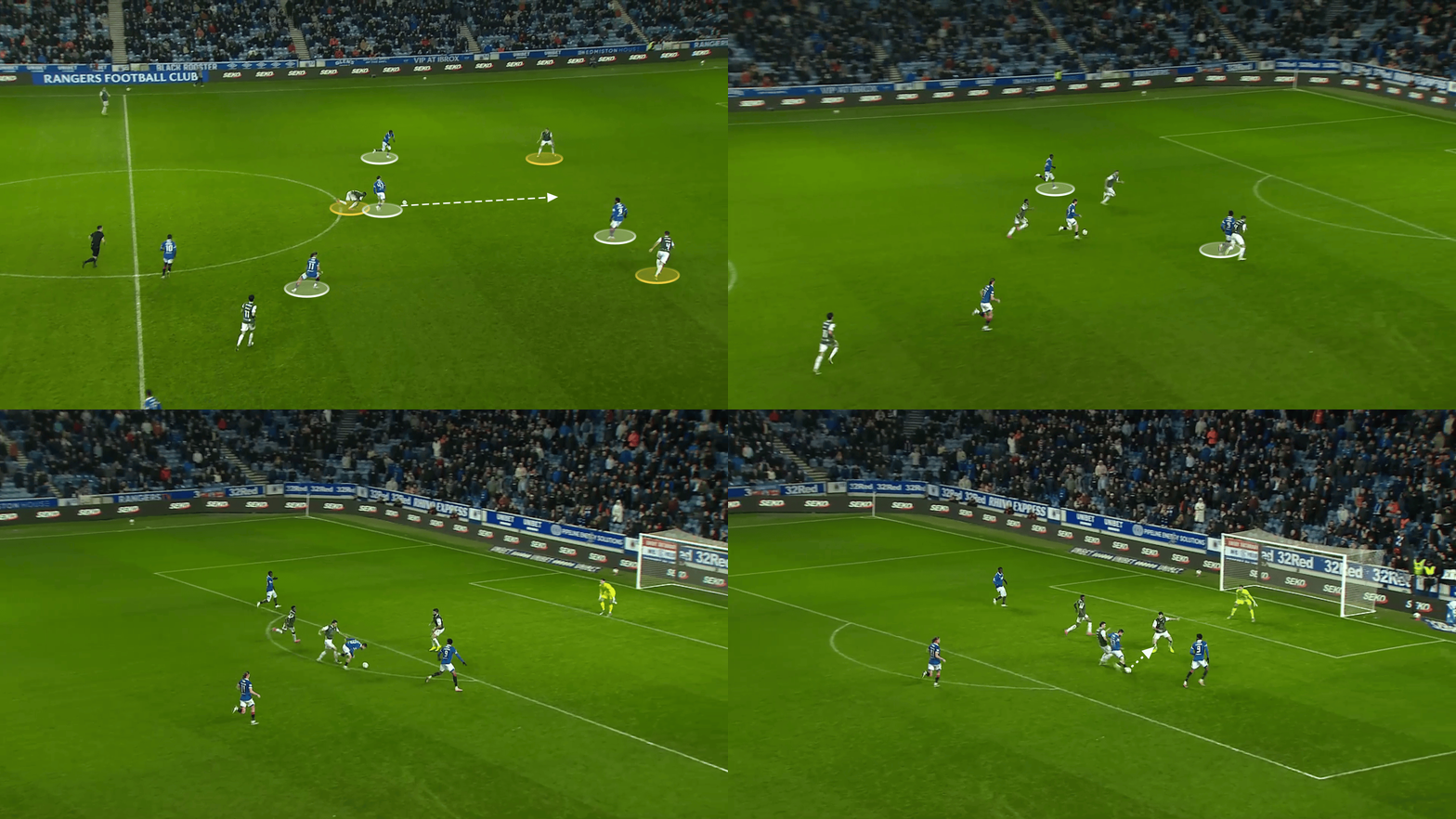
Here are a few examples in GIF form. Late on against Hibs in the recent 1–0 win, Nico Raskin puts his head down instead of attempting to find a runner. Rangers keep the pitch narrow, which suits the visiting defence, reduced to ten men, rather than making their numerical advantage count.
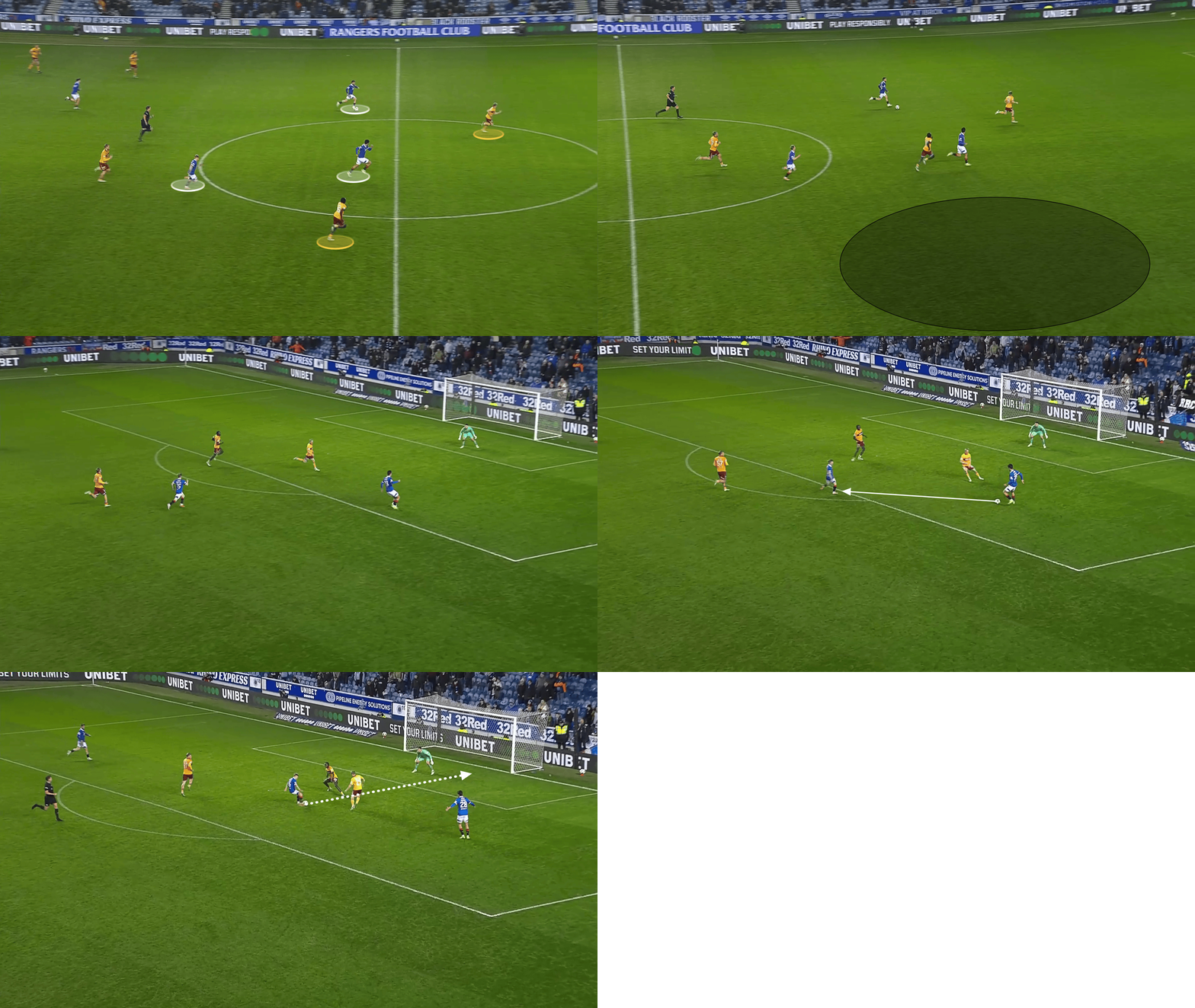
In this example against Motherwell, instead of one of Lyall Cameron or Bojan Miovski peeling wide, both make the same linear run, again narrowing the play. Although a shot is eventually worked, both players take an extra touch, slowing the move and allowing the recovering defence to regroup.
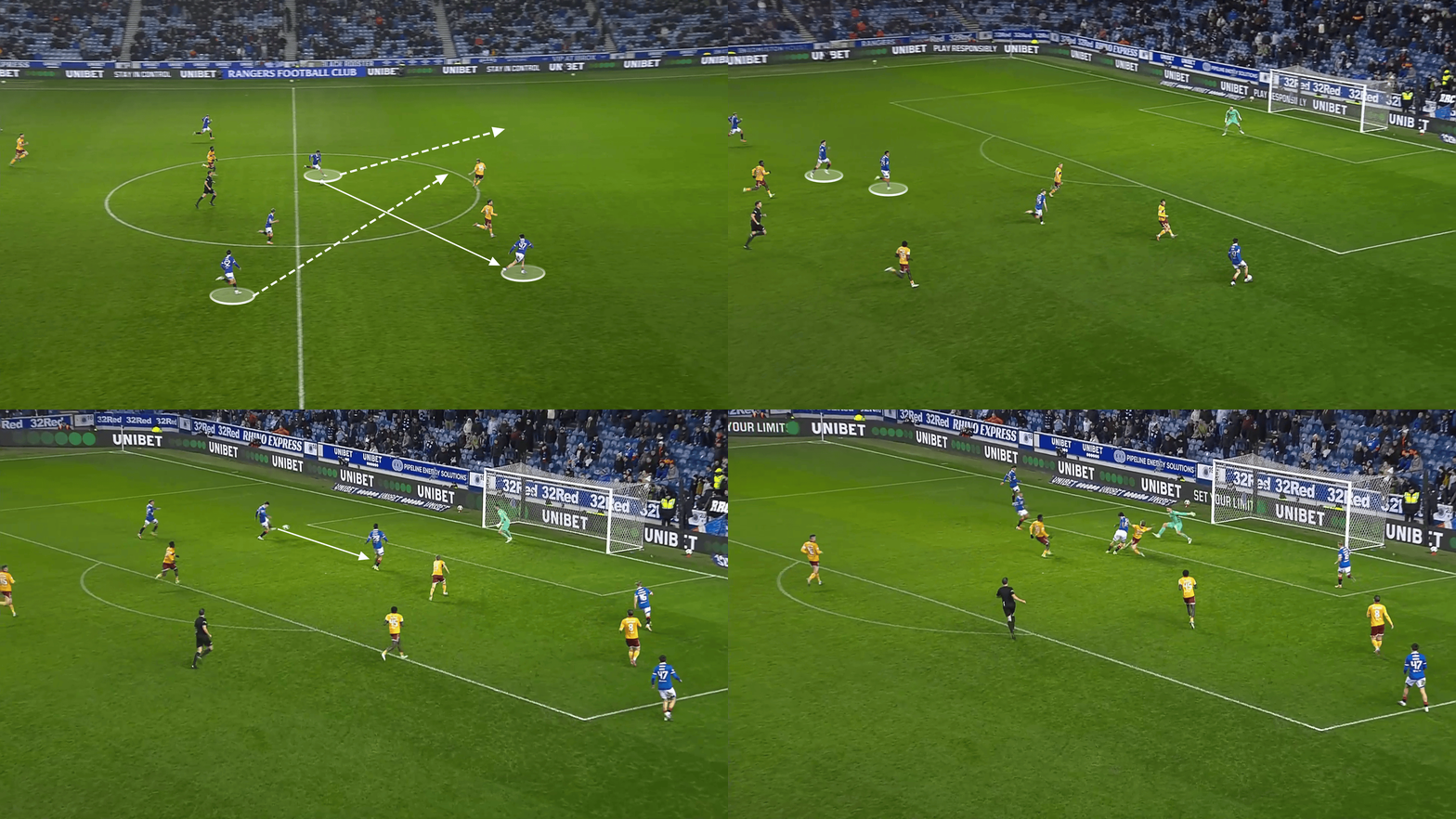
In this five-against-two late on yesterday, Rangers did make diagonal runs to stretch the pitch and create a clear advantage. This time, however, their execution let them down, with Findlay Curtis’ lay-off short and behind Miovski. The two appeared out of sync during three late attacks.
Although shots were attempted in each of the above examples, none exceeded 0.15xG, a 15 per cent chance of the shot ending in a goal on average, due to defensive proximity, narrowed angles and a failure to exploit space. None of the moves showed the fluency or rehearsal with which elite teams consistently punish opponents.
Why? The answer is twofold.
Firstly, Rangers’ strength is also their weakness. Rohl has transformed a soft side into one far more resilient, recording six clean sheets in his nine league matches in charge. They are tactically adaptable, rarely sticking to one shape, and the foundation he has built is an off-ball organisation. As a result, they are less definable by what they do with the ball. Motherwell edged possession yesterday, 54 per cent to 46, while the Hibs meeting was evenly split.
Rohl is constantly making compromises and, by his calculation, clean sheets are the starting point. As he said himself, “Against the ball, we see in every game a clear structure… the next step is now also to improve in possession.” The priority has been defensive solidity, and at times that emphasis is evident.
Consider how all of the chances above originate, with Rangers capitalising on opponents failing to break them down or falling into pressing traps in search of a late equaliser. Their goals in the two recent 1–0 wins came from a set piece, Manny Fernandez’s winner, and a well-worked transition that ended with Thelo Aasgaard converting Djeidi Gassama’s shot into an empty net.
Secondly, this is a team currently lacking established attacking relationships, players operating on the same wavelength who instinctively recognise cues and movements. That is largely due to Rohl frequently altering his team’s structure, style and personnel. They are not, in his words, connected in possession and that shows in high-stress transition moments.
Look at Rangers’ average positions in the win over Hibs. They mirrored David Gray’s back three, with Max Aarons joining the front five on one flank and Curtis providing width on the other. Connor Barron sat alone as a No.6 behind a wide front five, resembling a wide 4-1-5 in possession.

Now compare that with yesterday’s average on-ball positions. Rangers were far narrower, an attempt to congest central areas where Motherwell pose their biggest threat. The shape resembled a narrow 4-3-3 with the ball.

Consider how rarely Mikey Moore has lined up with the same supporting cast, whether starting as a No.10 or adjusting to different full-back partnerships and wing combinations, as Gassama has repeatedly done. When Raskin surged forward against Hibs, or when Cameron and Miovski ran down the same channel against Motherwell, Rangers appeared to be improvising, because in many respects they were.
These are not the rehearsed patterns developed during pre-season at St George’s Park. Rohl has dismantled the possession-heavy remnants of Russell Martin’s brief tenure and, with limited training time, is embedding his own ideas while prioritising results. Tight, scrappy games suit Rangers because Rohl is relying on superior individual quality and tactical flexibility to turn fine margins in their favour.
To quote the head coach again, for attacking relationships and patterns to improve, “we need training.” Since his arrival, Rangers have found ways to grind out wins, which is admirable given he inherited a side with one win in eight and confidence at rock bottom.
Can these players make better decisions and show more incision in decisive moments? Of course. But pressure reveals much, and it is no coincidence that Rangers have struggled to put Hibs and Motherwell away in recent weeks.
To turn these moments into routine successes, Rangers must develop an identity in possession to match the one forming off the ball. Only then will talk of a genuine title challenge become realistic.


Share